HEART PROCEDURE · KOTHRUD, PUNE

Heart valve treatment in Pune
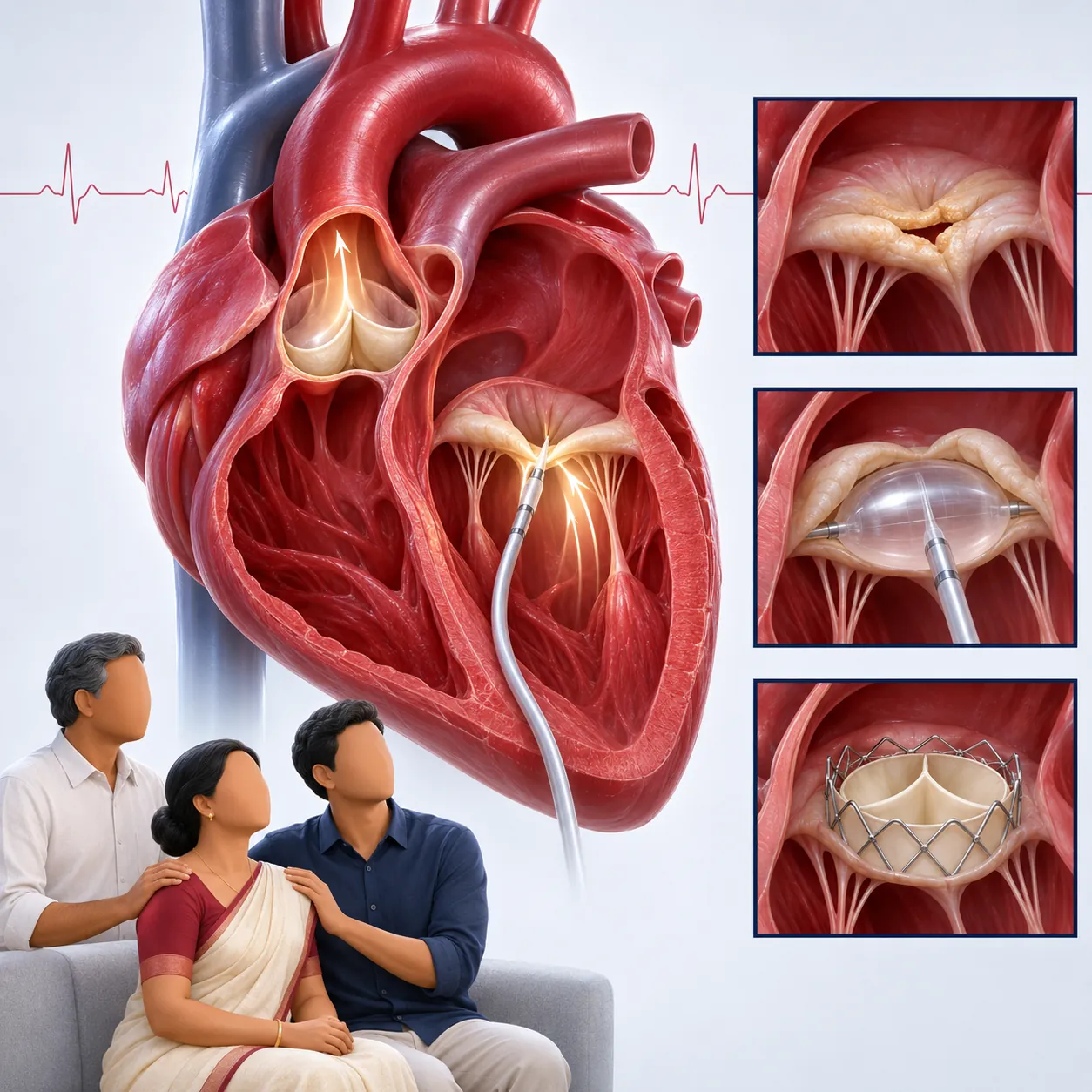
Opening narrowed heart valves through a catheter: balloon mitral valvotomy and TAVI.
When a heart valve becomes narrow and stiff, the heart has to work much harder. Dr Gauri Karmarkar assesses valve disease with 2D echo and has performed both balloon mitral valvotomy (BMV) and transcatheter aortic valve implantation (TAVI), treatments that avoid open-heart surgery for suitable patients.
Heart valve treatment in Pune – BMV and TAVI
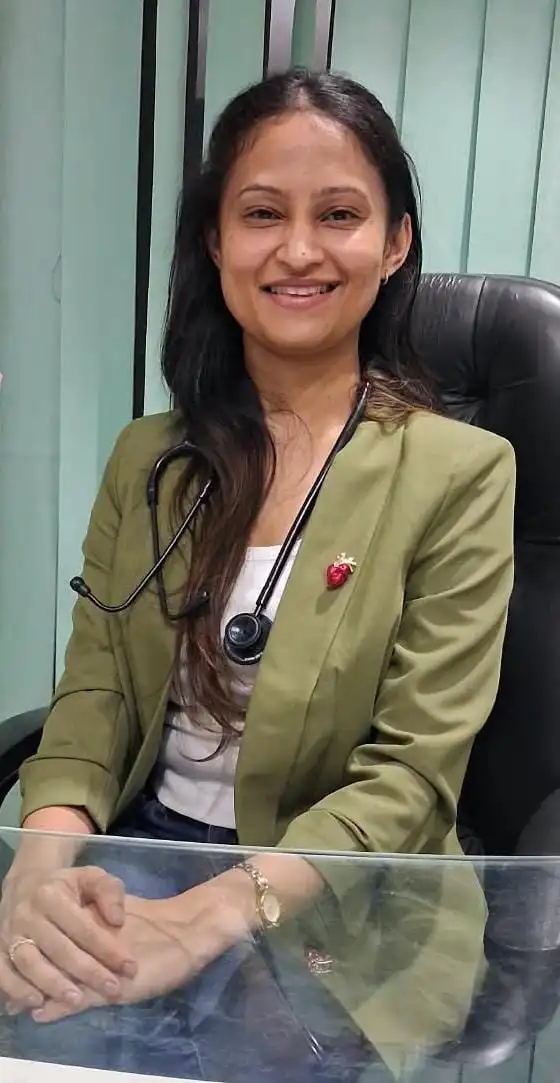
Dr Gauri Karmarkar
DrNB Cardiology · Consultant Cardiologist
DrNB Cardiology
Deenanath Mangeshkar Hospital, Pune
Specialised Cardiac Expertise
Angiography · Angioplasty · 2D Echo
Your language
English · Hindi · Marathi ·
OPD in Kothrud, Pune
Anurag Heart Care
OVERVIEW

Narrowed heart valves

Your heart has four valves that open and close with every beat to keep blood flowing in one direction. Two of them are commonly affected by narrowing (stenosis): the mitral valve, often after rheumatic fever in childhood, and the aortic valve, usually from age-related calcium build-up.
A narrowed valve may cause breathlessness, tiredness, chest pain, palpitations or fainting. Mild narrowing only needs regular echo check-ups. Severe narrowing with symptoms usually needs the valve to be opened or replaced.
AT A GLANCE
MAIN TESTS
2D echo, TEE, CT
APPROACH
Through a vein or artery
SURGERY
No open-heart cut
HOSPITAL STAY
Usually 2–4 days
SIGNS OF VALVE DISEASE

When to get your valves checked

Valve disease often develops slowly, and people adjust by doing less without realising it. A 2D echo is the key test, and a heart murmur heard by a doctor is often the first clue.

Symptoms

—
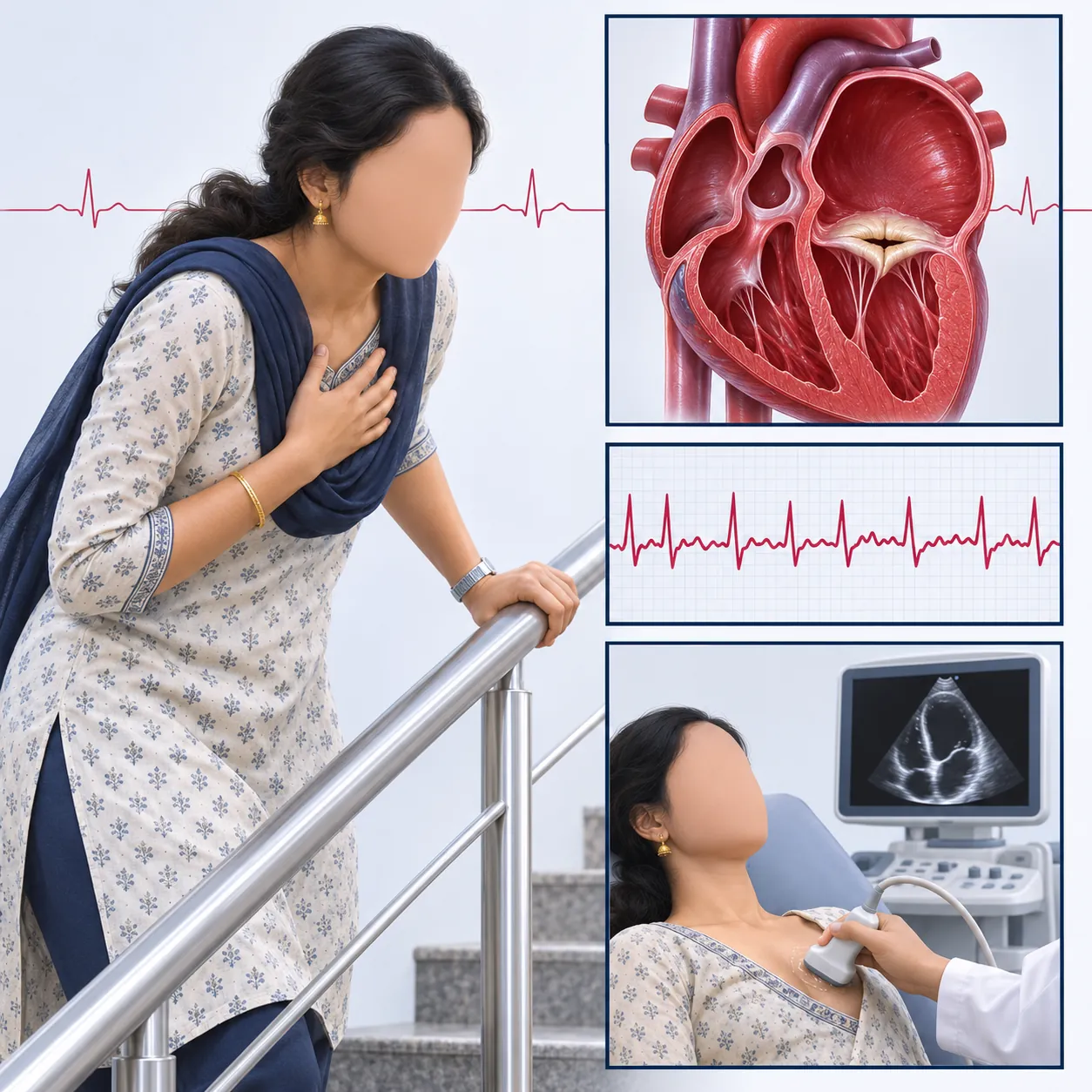
Breathlessness on walking or climbing stairs
—
Breathlessness when lying flat or at night
—
Palpitations or an irregular heartbeat
—
Chest tightness or fainting on effort
—
Swelling of the feet

Also get checked if

—
A doctor has heard a heart murmur
—
You had rheumatic fever as a child
—
You are planning a pregnancy and have known valve disease
—
You are older with new breathlessness
Balloon mitral valvotomy (BMV) for mitral stenosis
BALLOON MITRAL VALVOTOMY (BMV)

Opening a narrowed mitral valve

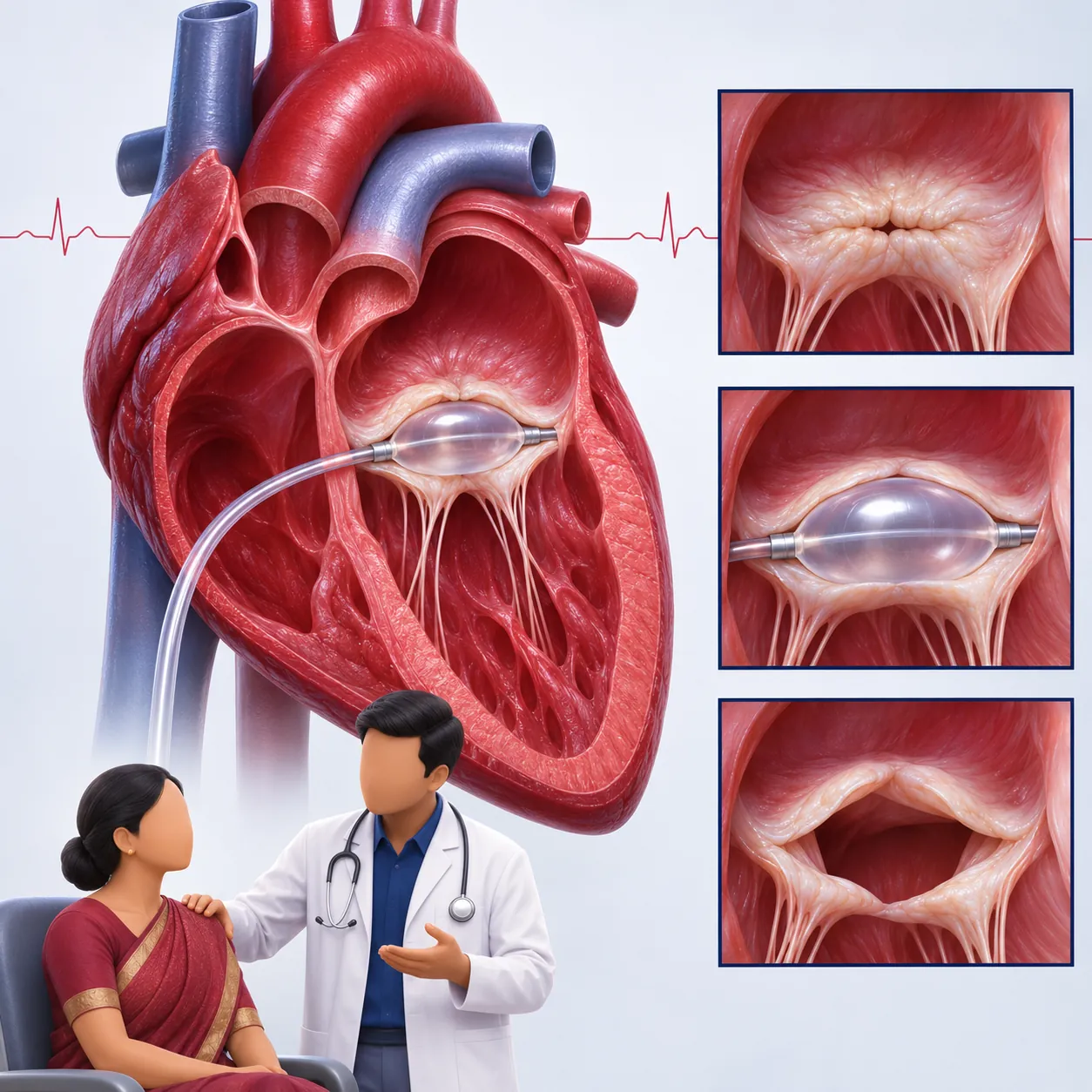
In mitral stenosis, the leaflets of the mitral valve are stuck together, usually after rheumatic fever. In BMV, a catheter is passed from a vein in the groin to the heart, and a special balloon is inflated across the valve to separate the leaflets.
The valve opens wider immediately, and breathlessness often improves within days. Suitability depends on the valve’s shape on echo, and a transoesophageal echo (TEE) is done first to make sure there is no clot in the heart.
MITRAL STENOSIS

Recognising mitral stenosis

Mitral stenosis is still common in India and often affects young adults, especially women. Symptoms may first appear or worsen during pregnancy, with a fast or irregular heartbeat (atrial fibrillation), or with infection.
Regular follow-up, medicines to control the heart rate, blood thinners when needed, and preventing further rheumatic fever are all part of care.
Symptoms of mitral stenosis
TAVI – transcatheter aortic valve implantation
TAVI

TAVI: a new aortic valve without open surgery

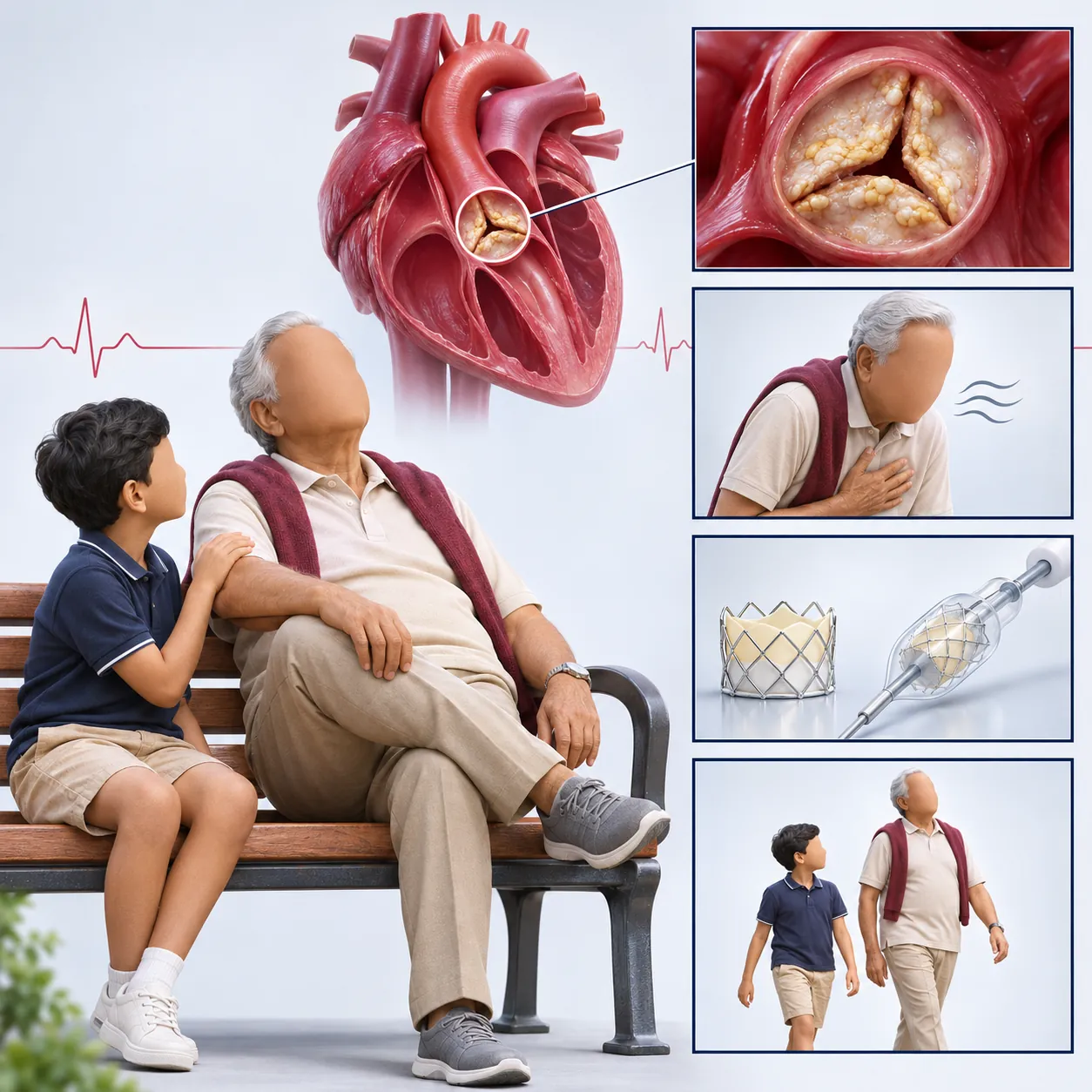
In transcatheter aortic valve implantation, a new valve, folded onto a thin tube, is passed usually through an artery in the groin up to the heart. It is expanded inside the old, narrowed valve and starts working immediately.
TAVI is mainly offered to older patients and those for whom open-heart surgery carries higher risk. A detailed CT scan helps plan the size and route.
AORTIC STENOSIS

Aortic stenosis in older adults

Calcium slowly builds up on the aortic valve with age. Once severe aortic stenosis causes chest pain, fainting or breathlessness, it should be treated promptly, because medicines alone cannot open the valve.
Older patients and their families can be reassured that age alone does not rule out treatment. Every option, from TAVI to surgery, is discussed openly.
Aortic stenosis in older adults
YOUR VALVE CARE, STEP BY STEP

From the first echo to the right treatment

Valve treatment is planned carefully, with every test explained and family involved in decisions.
01

Diagnosis

Clinical examination and 2D echo to measure how narrow and leaky the valve is.
02

Detailed planning

TEE, CT scan or angiography when needed, and a discussion of all treatment options.
03

The procedure

BMV or TAVI through a catheter, or referral for surgery if that is the better choice.
04

Follow-up

Echo check-ups, medicines and advice on preventing infection and rheumatic fever.
MEET YOUR CARDIOLOGIST

Meet Dr Gauri Karmarkar

MBBS · DNB (General Medicine) · DrNB (Cardiology)
Dr. Gauri Karmarkar is a Consultant Cardiologist with specialised training in Interventional Cardiology and General Medicine. She holds an MBBS degree from BJ Medical College, Pune, a DNB in General Medicine from Inlaks and Budhrani Hospital, Pune, and a DrNB in Interventional Cardiology from Deenanath Mangeshkar Hospital and Research Institute, Pune.
With professional experience at leading healthcare institutions in Pune, including Kamla Nehru Hospital and Fabiani Budhrani Heart Institute, she has developed clinical experience in the diagnosis and management of cardiovascular conditions.

Her clinical expertise includes 2D Echocardiography, Coronary Angiography, Percutaneous Coronary Angioplasty, Cardiac Catheterisation and various advanced interventional cardiology procedures. She also has experience with temporary pacemaker insertion, pericardial effusion tapping and other specialised cardiac procedures.

Dr. Gauri believes in evidence-based medical practice, compassionate patient care and a personalised approach to understanding cardiovascular health. Her professional interests include preventive cardiology, clinical research and medical education.

At Anurag Heart Care, her approach focuses on helping patients understand their heart health, receive appropriate medical guidance and make informed decisions about their cardiovascular well-being.
Her commitment is simple: providing thoughtful, evidence-based cardiac care with dedication and compassion.
FAQS

Heart valve treatment: common questions

Still have a question? Call or WhatsApp the clinic.

Do all narrowed valves need treatment?

No. Mild and moderate narrowing usually needs only regular echo check-ups. Treatment is advised when narrowing is severe or causes symptoms.

Is BMV an alternative to valve replacement?

For suitable patients with mitral stenosis, yes. BMV opens your own valve without surgery. If the valve is heavily calcified or leaky, surgery may be better.

Who is TAVI suitable for?

Mainly older patients with severe aortic stenosis, and those at higher risk from open-heart surgery. The decision is made after echo and CT assessment.

Can valve disease affect pregnancy?

Yes, especially mitral stenosis. If you have known valve disease, see a cardiologist before planning a pregnancy.

How long will I stay in hospital?

Usually 2 to 4 days after BMV or TAVI, compared with a longer stay after open-heart surgery.

Where can I get heart valve treatment in Pune?

Dr Gauri Karmarkar consults in Anurag Heart Care. Call +91 9356253548 to book an echo and consultation.

RELATED CARE

You may also find these helpful

Related tests and treatments, explained in the same clear way.
HEART TEST

ECG & 2D Echocardiography

Quick, painless tests of your heart rhythm, pumping and valves.
HEART CARE

Heart Failure

Care for a weak or stiff heart that causes breathlessness and swelling.
HEART PROCEDURE

Coronary Angiography

The X-ray test that shows exactly where heart arteries are narrowed or blocked.
BOOK AN APPOINTMENT

Book a consultation with a cardiologist in Kothrud, Pune

Leave your name and number, and the clinic will call you back to fix a time at the hospital that suits you.
CALL OR WHATSAPP
EMAIL
OPD
Anurag Heart Care: Mon–Sat · 10–8 pm

Request a call back

Takes less than a minute. Only your name and phone number are required.

    For severe chest pain or breathlessness, do not wait: go to the nearest hospital emergency or call 108.