HEART CARE · KOTHRUD, PUNE

Chest pain doctor in Pune

Finding out whether chest pain is from the heart, and treating coronary artery disease.
Chest pain can come from the heart, the lungs, the stomach or the muscles. Dr Gauri Karmarkar evaluates chest pain step by step, with an ECG, 2D echo and stress test first, and angiography only when it is truly needed.
Chest pain doctor in Pune – evaluation of heart-related chest pain
Dr Gauri Karmarkar
DrNB Cardiology · Consultant Cardiologist
DrNB Cardiology
Deenanath Mangeshkar Hospital, Pune
Specialised Cardiac Expertise
Angiography · Angioplasty · 2D Echo
Your language
English · Hindi · Marathi ·
OPD in Kothrud, Pune
Anurag Heart Care
OVERVIEW

Chest pain and coronary artery disease

Coronary artery disease is a build-up of fatty plaque in the arteries that supply the heart. When an artery narrows, the heart may not get enough blood during effort, causing angina. If a plaque cracks and a clot forms, the artery can block suddenly, causing a heart attack.
Not all chest pain is from the heart. Acidity, muscle strain, anxiety and lung problems are common causes too. The aim of a cardiology evaluation is to rule out a heart cause safely, or to find it early, before it causes a heart attack.
If you are looking for a chest pain doctor in Pune, Tilak Nagar or Govandi, Dr Gauri Karmarkar offers a calm, thorough assessment and explains every finding in plain language.
AT A GLANCE
FIRST TESTS
ECG and 2D echo
NEXT IF NEEDED
Stress test
ONLY IF NEEDED
Angiography
EMERGENCY
Call 108
WARNING SIGNS

Chest pain that needs a cardiologist

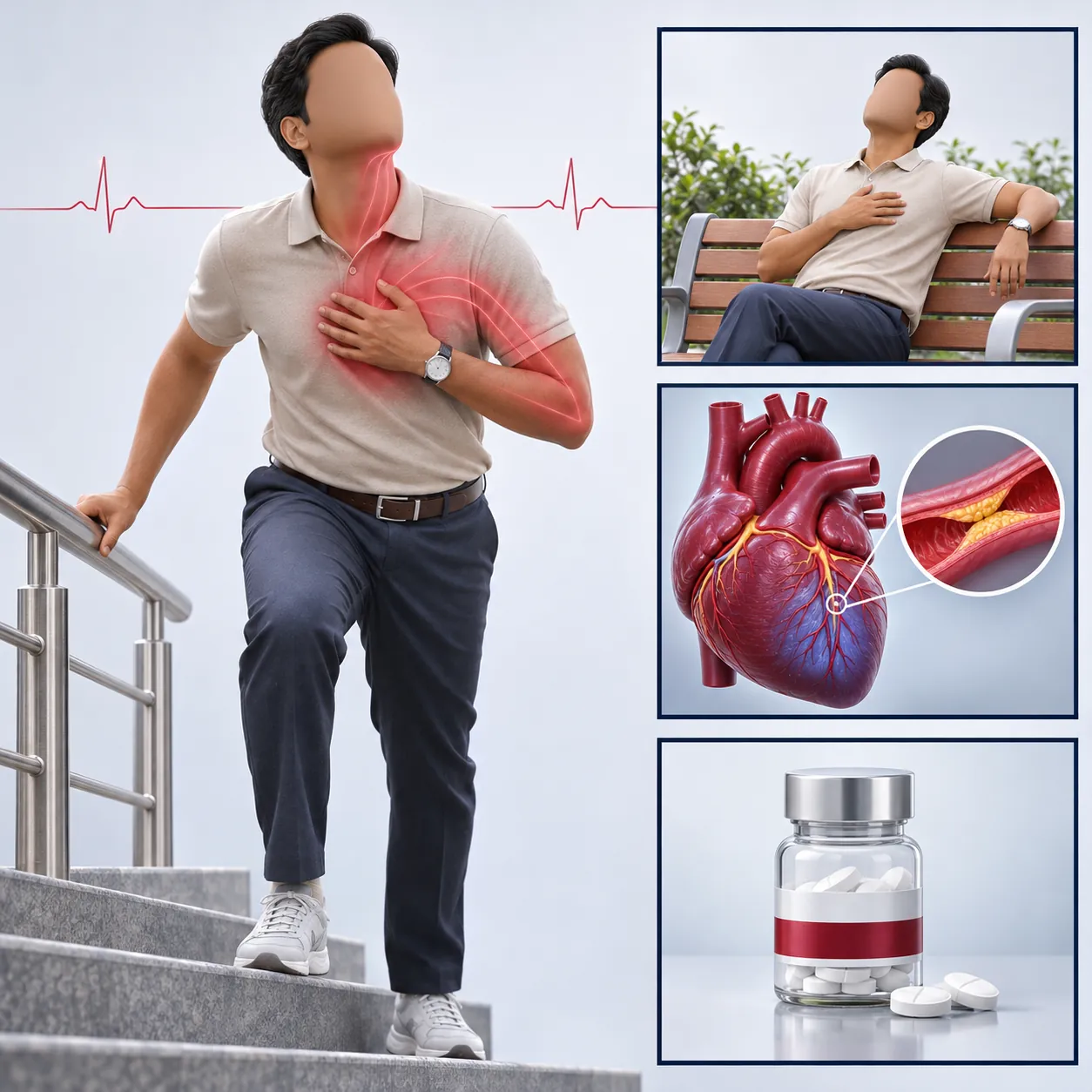
Heart-related chest pain is often described as pressure, heaviness or tightness rather than a sharp pain. It may spread to the arm, neck, jaw or back.

Angina (see a cardiologist soon)

—
Chest heaviness on walking, climbing stairs or after meals
—
Pain that settles within minutes of rest
—
Breathlessness or tiredness on effort
—
Discomfort in the jaw, arm or upper back on exertion

Heart attack (go to emergency now)

—
Severe pain or pressure lasting more than 10 to 15 minutes
—
Pain at rest with sweating, nausea or vomiting
—
Breathlessness, faintness or a sense of doom
—
Pain spreading to the left arm, jaw or back
Do not wait for an appointment
If chest pain is severe, lasts more than a few minutes or comes with sweating or breathlessness, go to the nearest hospital emergency immediately or call 108. Chew an aspirin only if a doctor has advised it.
Angina – heart-related chest pain
ANGINA

What angina feels like

Angina is chest discomfort that comes on with effort, stress or a heavy meal, and settles with rest. It is a warning sign that part of the heart is not getting enough blood.
People with diabetes, older adults and women may have less typical symptoms, such as breathlessness, tiredness or discomfort in the upper abdomen, so these deserve attention too.
HEART ATTACK WARNING SIGNS

Recognise a heart attack early

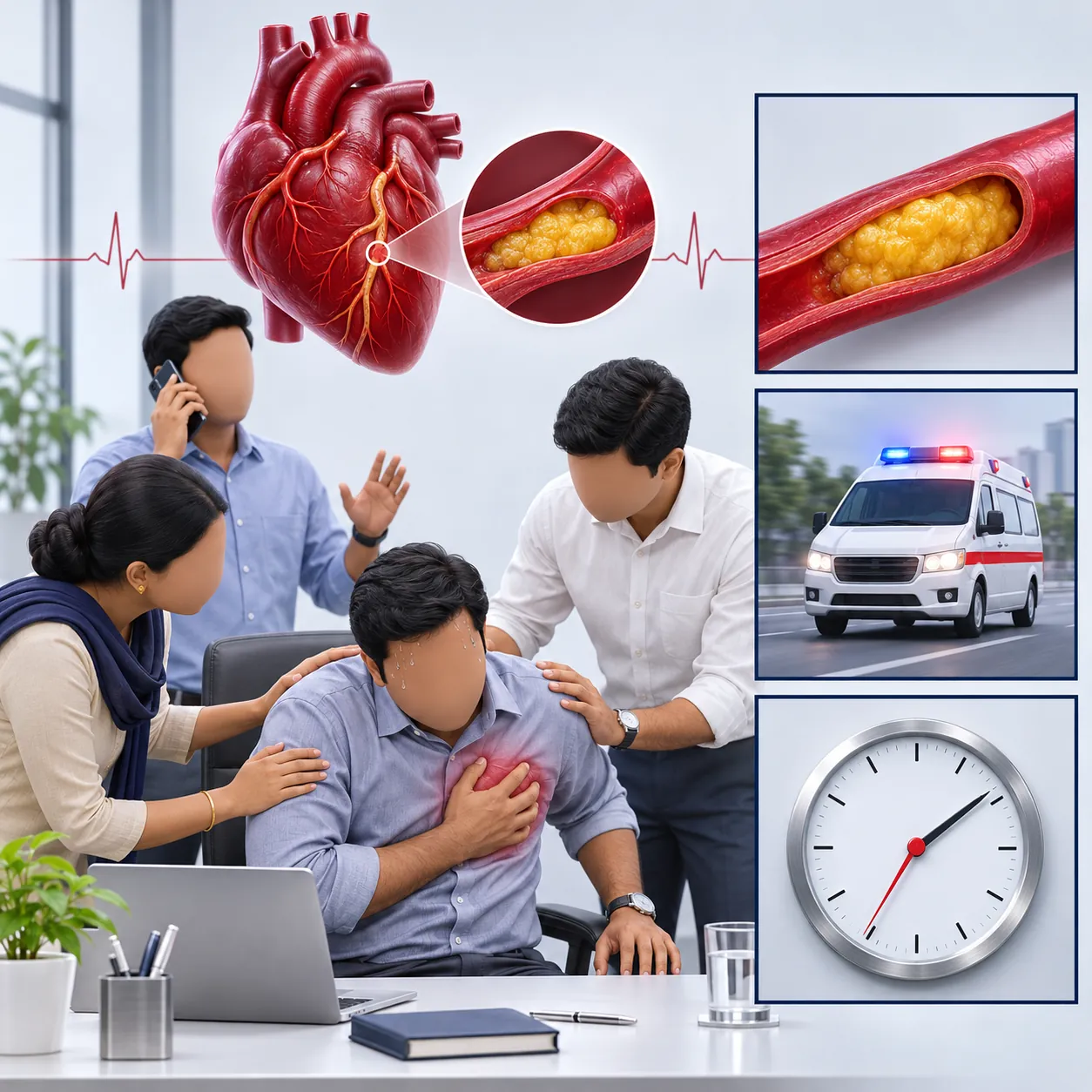
A heart attack happens when an artery is suddenly blocked. Treatment within the first hour or two can save heart muscle and lives, so recognising the signs matters.
—
Pressure, squeezing or heaviness in the centre of the chest
—
Pain spreading to the arm, jaw, neck or back
—
Cold sweat, nausea or vomiting
—
Breathlessness, dizziness or fainting
Heart attack warning signs
Coronary artery disease – blocked heart arteries
CORONARY ARTERY DISEASE

How blocked arteries are found and treated

After an ECG and 2D echo, a stress test (TMT or stress echo) shows whether the heart gets enough blood during effort. If tests suggest a significant blockage, coronary angiography shows exactly where it is.
Treatment may be medicines alone, angioplasty with a stent, or bypass surgery, along with control of blood pressure, sugar and cholesterol and stopping smoking.
NON-CARDIAC CHEST PAIN

When chest pain is not from the heart

Many patients are reassured after a simple evaluation. Acidity and reflux, muscle or rib pain, anxiety, and lung conditions are common causes of chest pain.
Once a heart cause has been ruled out, Dr Gauri Karmarkar will guide you to the right next step, so you are not left worrying.
Chest pain that is not from the heart
YOUR CHEST PAIN EVALUATION

A step-by-step approach

Only the tests you need, in the right order.
01

Consultation

A careful history, examination and review of your risk factors and reports.
02

ECG and 2D echo

Quick, painless tests of the heart’s rhythm, pumping and valves.
03

Stress test

TMT or stress echo to see how the heart copes with effort, if needed.
04

Angiography and treatment

Only if tests point to a significant blockage, followed by a clear treatment plan.
MEET YOUR CARDIOLOGIST

Meet Dr Gauri Karmarkar

MBBS · DNB (General Medicine) · DrNB (Cardiology)
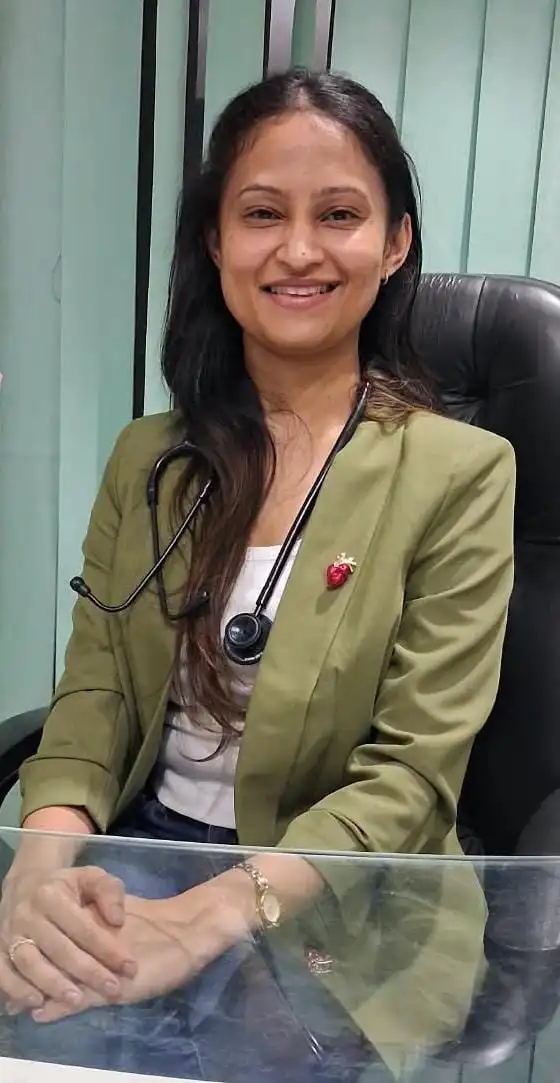
Dr. Gauri Karmarkar is a Consultant Cardiologist with specialised training in Interventional Cardiology and General Medicine. She holds an MBBS degree from BJ Medical College, Pune, a DNB in General Medicine from Inlaks and Budhrani Hospital, Pune, and a DrNB in Interventional Cardiology from Deenanath Mangeshkar Hospital and Research Institute, Pune.
With professional experience at leading healthcare institutions in Pune, including Kamla Nehru Hospital and Fabiani Budhrani Heart Institute, she has developed clinical experience in the diagnosis and management of cardiovascular conditions.

Her clinical expertise includes 2D Echocardiography, Coronary Angiography, Percutaneous Coronary Angioplasty, Cardiac Catheterisation and various advanced interventional cardiology procedures. She also has experience with temporary pacemaker insertion, pericardial effusion tapping and other specialised cardiac procedures.

Dr. Gauri believes in evidence-based medical practice, compassionate patient care and a personalised approach to understanding cardiovascular health. Her professional interests include preventive cardiology, clinical research and medical education.

At Anurag Heart Care, her approach focuses on helping patients understand their heart health, receive appropriate medical guidance and make informed decisions about their cardiovascular well-being.
Her commitment is simple: providing thoughtful, evidence-based cardiac care with dedication and compassion.
FAQS

Chest pain: common questions

Still have a question? Call or WhatsApp the clinic.

How do I know if my chest pain is from the heart?

Heart pain is often a pressure or heaviness that comes on with effort and settles with rest. But symptoms vary, so it is safest to get an ECG and see a doctor.

Do I need an angiography if I have chest pain?

Not always. Many patients need only an ECG, echo or stress test first. Angiography is advised when these tests or your symptoms suggest a significant blockage.

Can acidity feel like a heart attack?

Yes, the two can feel similar. Never assume chest pain is acidity, especially if you have risk factors such as diabetes, high BP or smoking.

Can young people have heart attacks?

Yes. Heart attacks in people in their 30s and 40s are increasingly seen, especially with smoking, diabetes, high cholesterol or a strong family history.

Is a normal ECG enough to rule out heart disease?

No. An ECG can be normal between episodes of angina. A stress test or other tests may be needed.

Where can I see a chest pain doctor in Pune?

Dr Gauri Karmarkar consults in Pune at Anurag Heart care . For severe pain, go to an emergency instead.

RELATED CARE

You may also find these helpful

Related tests and treatments, explained in the same clear way.
HEART TEST

Stress Test (TMT, Stress Echo & Dobutamine Echo)

How your heart copes with effort: TMT, stress echo and dobutamine echo.
HEART PROCEDURE

Coronary Angiography

The X-ray test that shows exactly where heart arteries are narrowed or blocked.
HEART PROCEDURE

Coronary Angioplasty & Stenting

Opening blocked heart arteries with a balloon and stent, without open surgery.
BOOK AN APPOINTMENT

Book a consultation with a cardiologist in Kothrud, Pune

Leave your name and number, and the clinic will call you back to fix a time at the hospital that suits you.
CALL OR WHATSAPP
EMAIL
OPD
Anurag Heart Care: Mon–Sat · 10–8 pm

Request a call back

Takes less than a minute. Only your name and phone number are required.

    For severe chest pain or breathlessness, do not wait: go to the nearest hospital emergency or call 108.