
HEART TEST · KOTHRUD, PUNE
Stress test in Pune
TMT, stress echo and dobutamine stress echo: how your heart copes with effort.
A stress test shows how your heart performs when it has to work harder. It helps find blocked arteries, judge fitness before surgery and check progress after treatment. Dr Gauri Karmarkar’s DrNB thesis focused on advanced stress echocardiography.

Dr Gauri Karmarkar
DrNB Cardiology · Consultant Cardiologist
OVERVIEW
What is a stress test?
A narrowed heart artery may supply enough blood at rest, but not during effort. A stress test makes the heart work harder, usually by walking on a treadmill, while the ECG and blood pressure are monitored, to look for signs of reduced blood flow.
In a stress echo, ultrasound images of the heart are taken before and immediately after exercise, which makes the test more accurate. For people who cannot walk on a treadmill, a medicine called dobutamine is used to make the heart work harder instead.
For a stress test in Pune, Dr Gauri Karmarkar helps you choose the right type of test for your symptoms and fitness, and explains the result the same day.
AT A GLANCE
TMT TAKES
About 30 minutes
STRESS ECHO
About 45 minutes
WEAR
Comfortable shoes
MONITORED
ECG and BP throughout
WHY IT IS DONE
When is a stress test advised?
Stress testing is one of the main ways to look for coronary artery disease without an invasive test.
To look for blockages
—
Chest pain or breathlessness on exertion
—
Many risk factors, such as diabetes or a family history
—
An ECG with possible changes
—
Before starting a strenuous exercise programme
To check fitness
—
Before major surgery
—
After angioplasty or bypass surgery
—
To guide safe exercise levels
—
To assess valve disease in some patients
STRESS ECHO
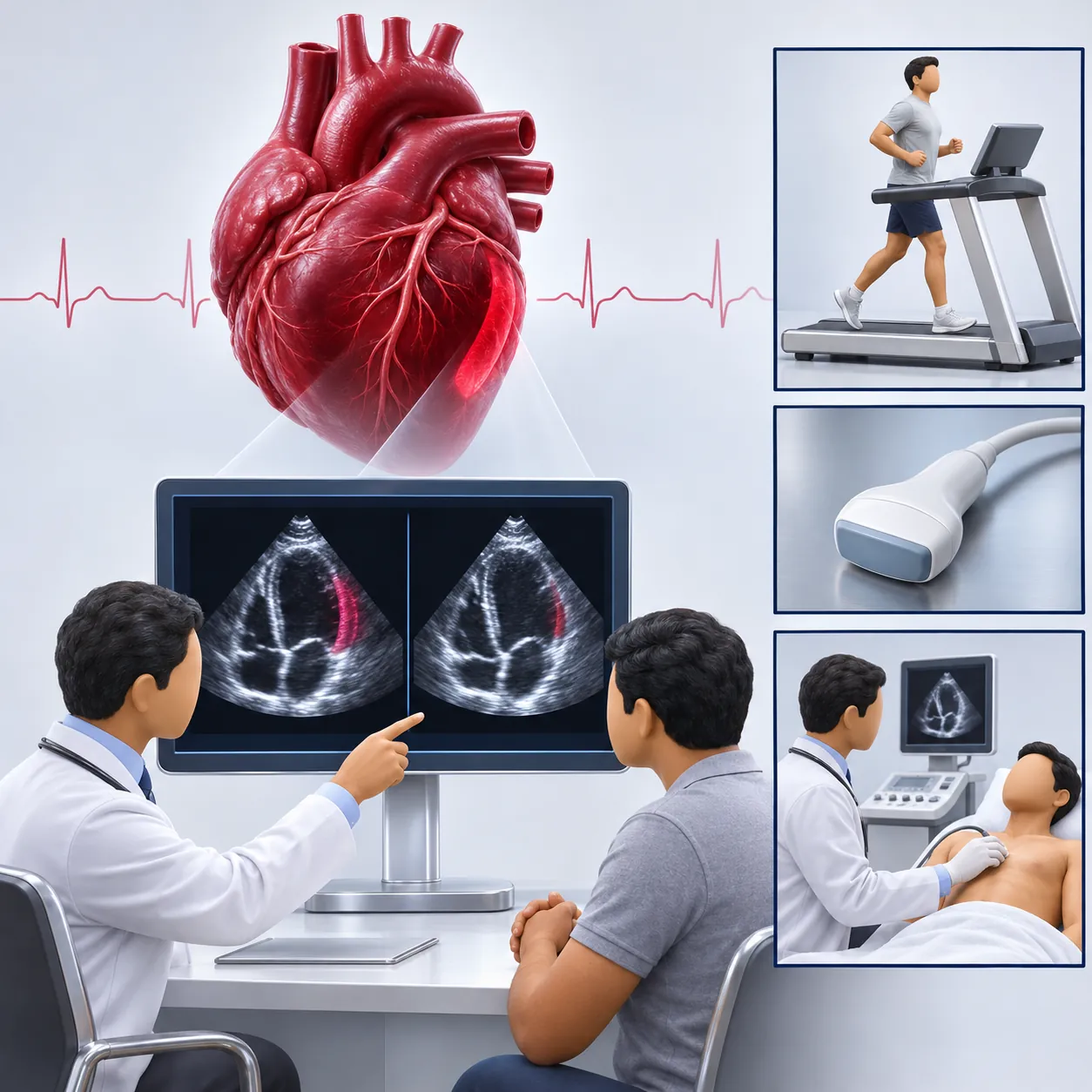
Stress echo: pictures plus the ECG
A stress echo adds ultrasound images to the treadmill test. If part of the heart muscle does not move as well after exercise, it suggests that its artery is narrowed.
It is more accurate than a treadmill ECG alone, especially in women and in people whose resting ECG is abnormal.
DOBUTAMINE STRESS ECHO
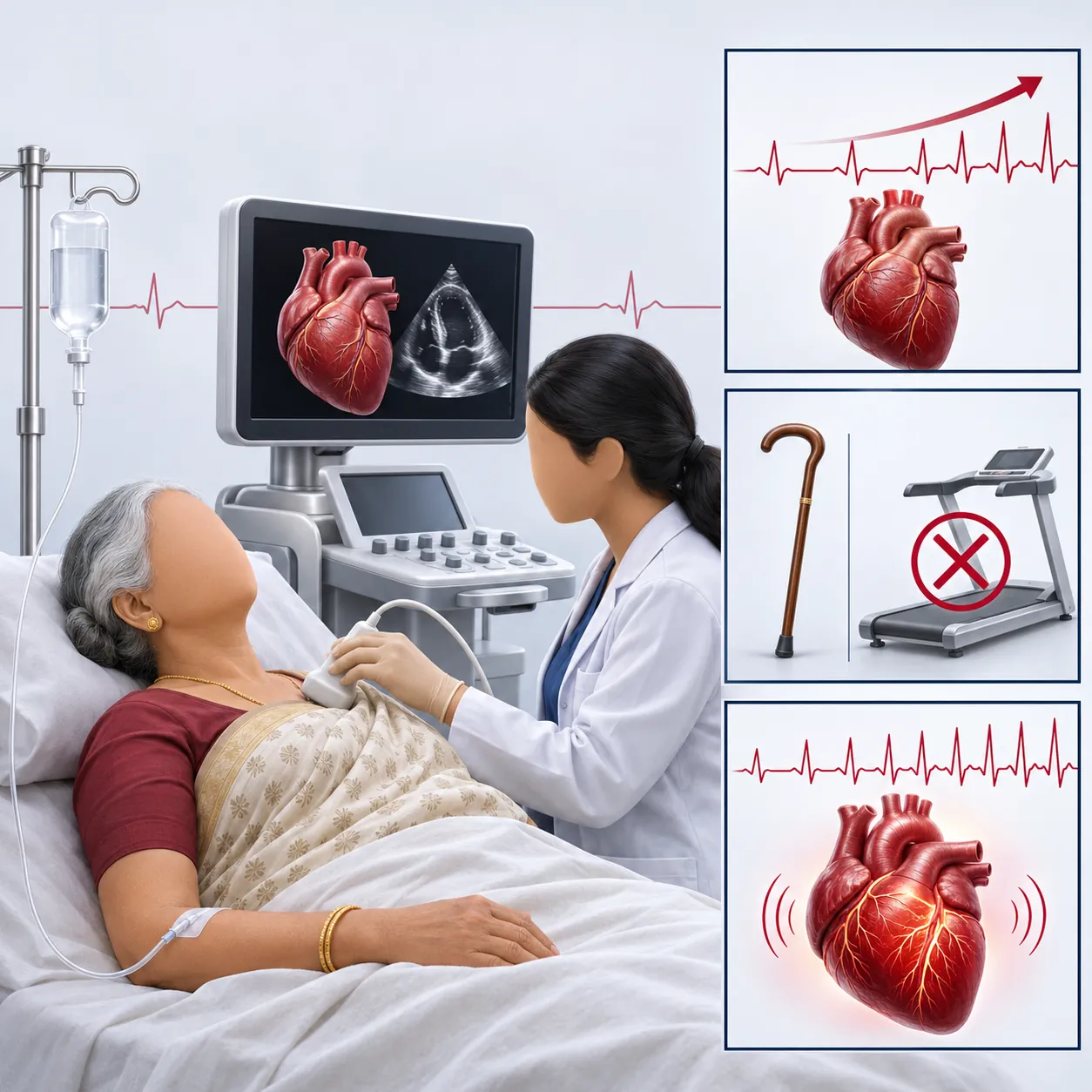
For patients who cannot exercise
Knee or back problems, older age or lung disease can make treadmill walking difficult. In a dobutamine stress echo, the medicine is given through a drip to raise the heart rate gradually while echo images are taken.
The test is closely monitored throughout, and the medicine wears off within minutes once it is stopped.

PREPARATION
How to prepare for a stress test
Simple preparation helps the test go smoothly and give reliable results.
—
Wear comfortable clothes and walking shoes
—
Avoid a heavy meal for about 1 to 2 hours before the test
—
Ask whether to pause medicines such as beta-blockers
—
Avoid tea, coffee and smoking on the day of the test
—
Bring your previous reports and medicine list
ON THE DAY
What happens during the test
You are monitored closely at every stage, and can stop if you feel unwell.
01
Resting tests
Resting ECG, blood pressure and, for a stress echo, baseline images.
02
Exercise
Walking on a treadmill that becomes gradually faster and steeper.
03
Recovery
ECG and BP are watched as your heart rate settles; echo images are taken.
04
Results
Findings are explained, with a plan for any further tests or treatment.
MEET YOUR CARDIOLOGIST
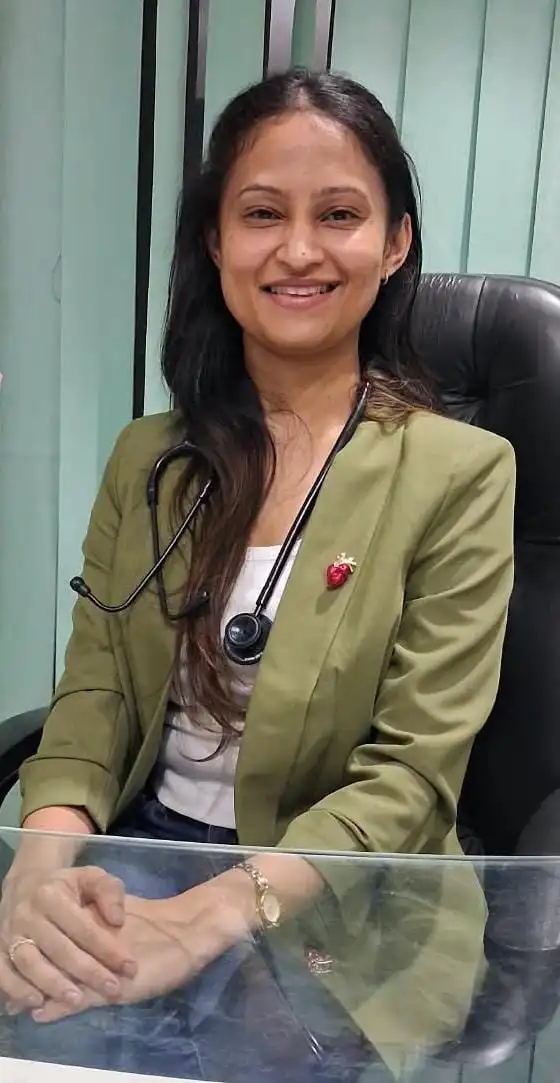
Meet Dr Gauri Karmarkar
MBBS · DNB (General Medicine) · DrNB (Cardiology)
Dr. Gauri Karmarkar is a Consultant Cardiologist with specialised training in Interventional Cardiology and General Medicine. She holds an MBBS degree from BJ Medical College, Pune, a DNB in General Medicine from Inlaks and Budhrani Hospital, Pune, and a DrNB in Interventional Cardiology from Deenanath Mangeshkar Hospital and Research Institute, Pune.
With professional experience at leading healthcare institutions in Pune, including Kamla Nehru Hospital and Fabiani Budhrani Heart Institute, she has developed clinical experience in the diagnosis and management of cardiovascular conditions.
Her clinical expertise includes 2D Echocardiography, Coronary Angiography, Percutaneous Coronary Angioplasty, Cardiac Catheterisation and various advanced interventional cardiology procedures. She also has experience with temporary pacemaker insertion, pericardial effusion tapping and other specialised cardiac procedures.
Dr. Gauri believes in evidence-based medical practice, compassionate patient care and a personalised approach to understanding cardiovascular health. Her professional interests include preventive cardiology, clinical research and medical education.
At Anurag Heart Care, her approach focuses on helping patients understand their heart health, receive appropriate medical guidance and make informed decisions about their cardiovascular well-being.
Her commitment is simple: providing thoughtful, evidence-based cardiac care with dedication and compassion.
FAQS
Stress test: common questions
Still have a question? Call or WhatsApp the clinic.
Is a stress test safe?
Yes, for most people. You are monitored throughout, and the test is stopped if any symptoms or changes appear.
What is the difference between TMT and stress echo?
A TMT looks at the ECG during exercise. A stress echo also takes ultrasound pictures of the heart, which makes it more accurate.
What if I cannot walk on a treadmill?
A dobutamine stress echo uses a medicine to make the heart work harder instead of exercise.
Should I stop my medicines before the test?
Some medicines, such as beta-blockers, may be paused. Ask your doctor; do not stop any medicine on your own.
What if my stress test is abnormal?
Depending on the result, treatment may be adjusted or coronary angiography may be advised to look at the arteries directly.
Where can I get a stress test in Pune?
Call +91 9356253548 to book a consultation with Dr Gauri Karmarkar in Pune, at Anurag Heart care.
RELATED CARE
You may also find these helpful
Related tests and treatments, explained in the same clear way.
HEART CARE
Chest Pain & Coronary Artery Disease
Finding out whether chest pain is from the heart, and treating blocked arteries.
HEART TEST
ECG & 2D Echocardiography
Quick, painless tests of your heart rhythm, pumping and valves.
HEART PROCEDURE
Coronary Angiography
The X-ray test that shows exactly where heart arteries are narrowed or blocked.
BOOK AN APPOINTMENT
Book a consultation with a cardiologist in Kothrud, Pune
Leave your name and number, and the clinic will call you back to fix a time at the hospital that suits you.
CALL OR WHATSAPP
OPD
Anurag Heart Care: Mon–Sat · 10–8 pm
Request a call back
Takes less than a minute. Only your name and phone number are required.