HEART PROCEDURE · Kothrud, Pune

Pacemaker implantation in Pune
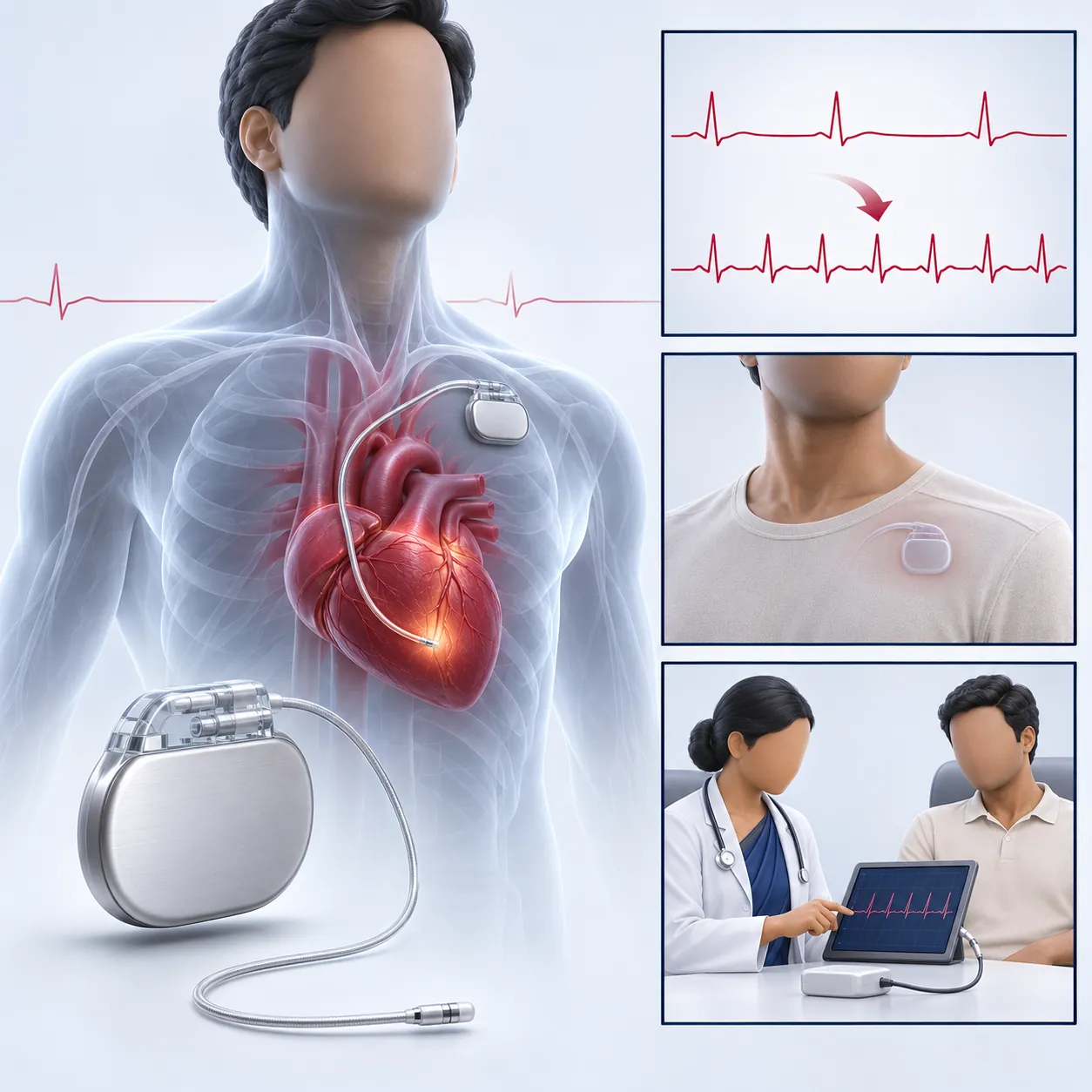
Restoring a steady heartbeat when the heart beats too slowly or pauses.
A pacemaker is a small device that keeps your heart from beating too slowly. Dr Gauri Karmarkar has performed more than 10 permanent pacemaker implantations and manages temporary pacing in emergencies, with clear guidance on life with the device afterwards.
Pacemaker implantation in Pune
Dr Gauri Karmarkar
DrNB Cardiology · Consultant Cardiologist
DrNB Cardiology
Deenanath Mangeshkar Hospital, Pune
Specialised Cardiac Expertise
Angiography · Angioplasty · 2D Echo
Your language
English · Hindi · Marathi ·
OPD in Kothrud, Pune
Anurag Heart Care
OVERVIEW

What does a pacemaker do?

Your heartbeat is controlled by a natural electrical system. With age, after a heart attack or because of some medicines and diseases, this system can slow down or fail to conduct signals properly. The heart then beats too slowly or pauses, and the brain and body do not get enough blood.
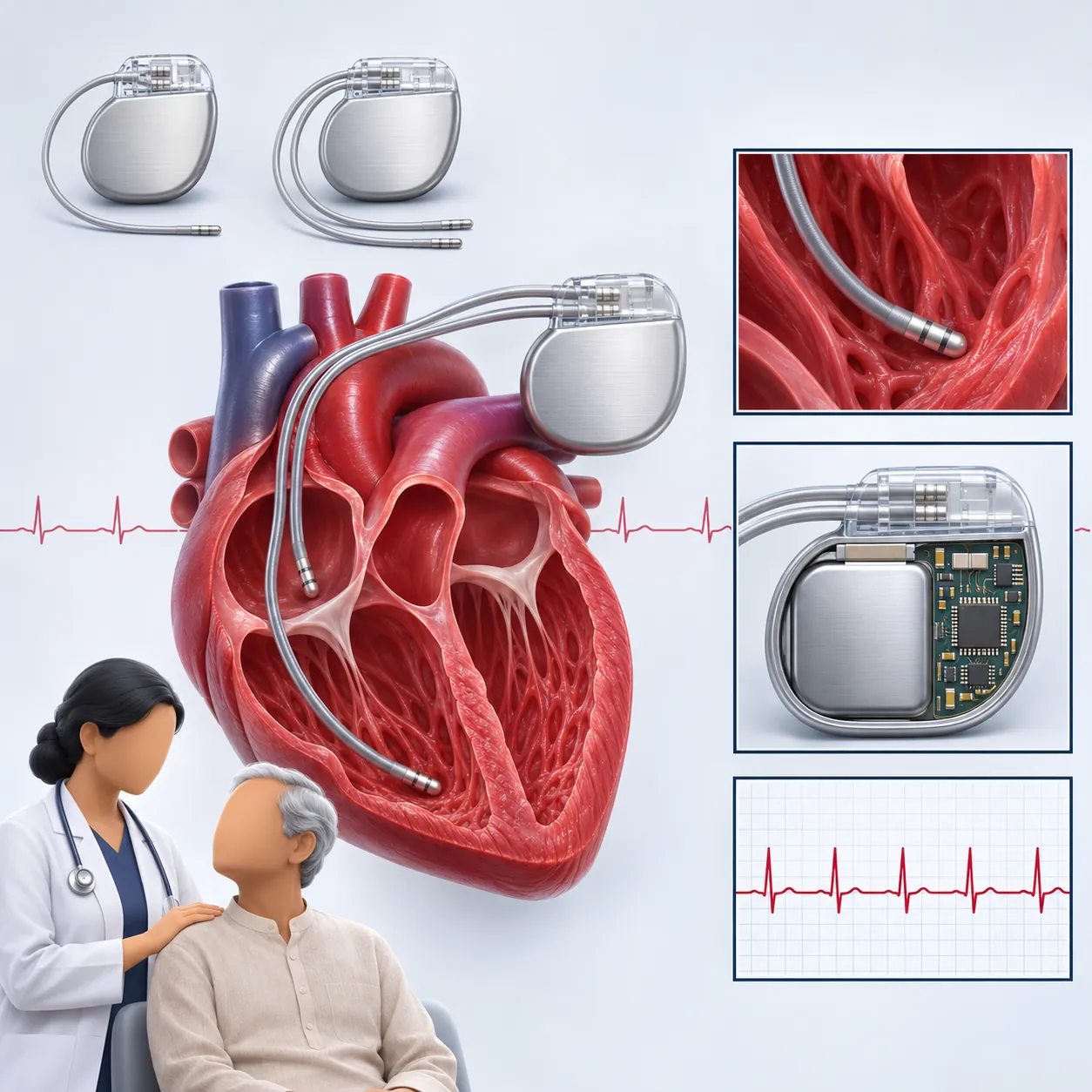
A pacemaker watches your heartbeat all the time. If the heart rate drops too low, it sends a tiny, painless electrical pulse to make the heart beat. It has a small battery-powered unit under the skin and one or two thin wires (leads) that reach the heart through a vein.
For patients needing pacemaker implantation in Pune and nearby areas, Dr Gauri Karmarkar confirms the diagnosis with ECG and Holter monitoring first, so a pacemaker is advised only when it is truly needed.
AT A GLANCE
DONE UNDER
Local anaesthesia
PLACED
Below the collarbone
TAKES ABOUT
1 hour
HOSPITAL STAY
Usually 1–2 days
SYMPTOMS AND REASONS

Who needs a pacemaker?

A slow heartbeat does not always need a pacemaker. Fit people and athletes can have slow heart rates normally. It is advised when a slow or interrupted rhythm causes symptoms or puts you at risk.

Symptoms of a slow heartbeat

—
Dizziness or light-headedness
—
Fainting or near-fainting spells
—
Unusual tiredness and weakness
—
Breathlessness on mild effort
—
Confusion in older adults

Common causes

—
Heart block, where signals do not pass from the upper to the lower chambers
—
Sick sinus syndrome (a tired natural pacemaker)
—
Slow pulse with atrial fibrillation
—
Rhythm problems after a heart attack or heart surgery
Fainting is never normal
If you or a family member faints, especially without warning or with injury, see a doctor promptly. Repeated fainting with a very slow pulse needs emergency care.
Symptoms of a slow heartbeat (bradycardia)
SYMPTOMS

When a slow heartbeat causes trouble

Many people put tiredness, dizziness or falls down to age. Sometimes the real cause is a heart rhythm that is too slow. An ECG, and often a 24 to 48-hour Holter recording, can show whether the heart is slowing down or pausing.
Your medicines are also reviewed, because some blood pressure and heart medicines can slow the pulse and may only need adjusting.
PERMANENT PACEMAKER

How a permanent pacemaker works

Under local anaesthesia, a small cut is made below the collarbone. The leads are guided through a vein into the heart using X-ray, tested, and connected to the pacemaker, which is placed in a pocket under the skin.
Depending on your rhythm problem, a single-chamber or dual-chamber pacemaker is chosen. The battery usually lasts many years and is checked at every follow-up.
Permanent pacemaker – how it works
Temporary pacing in an emergency
TEMPORARY PACING

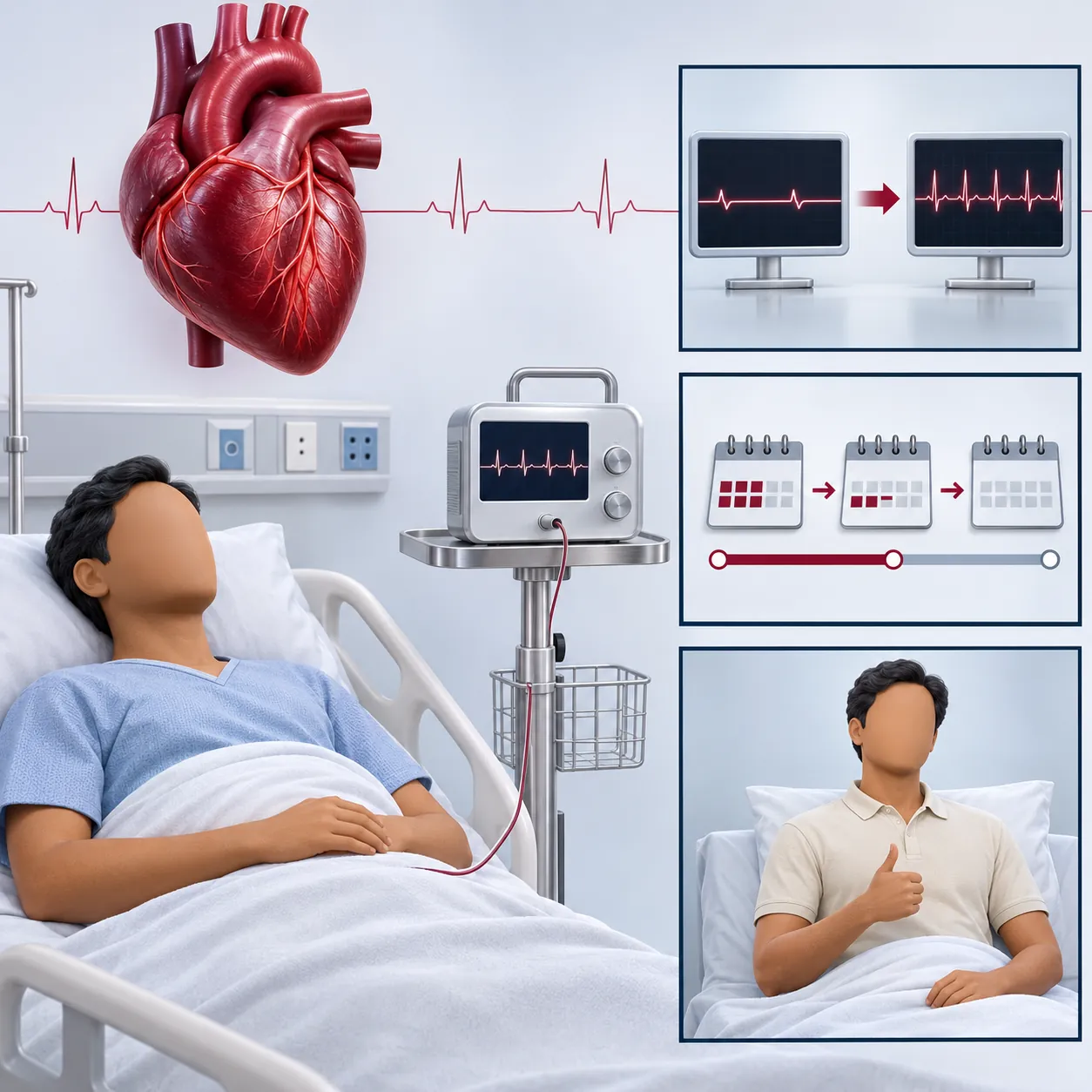
Temporary pacing in an emergency

When the heartbeat becomes dangerously slow, for example during a heart attack or because of medicine toxicity, a temporary pacing wire can be passed through a vein to support the heart for a few days.
This buys time for the rhythm to recover. If it does not, a permanent pacemaker is planned.
LIFE WITH A PACEMAKER

Back to your normal routine

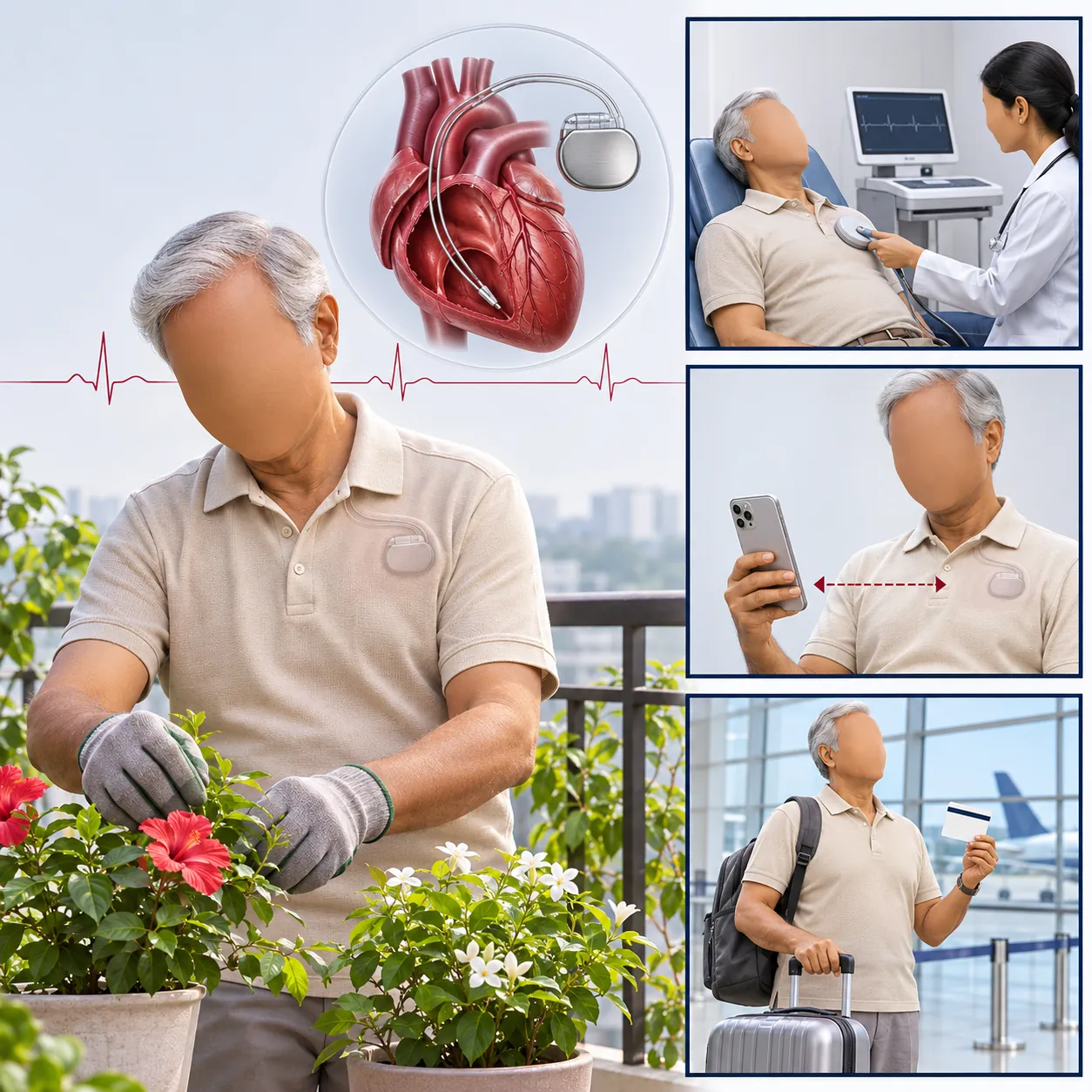
Most patients go home in 1 to 2 days and return to normal activities within a few weeks. You will be given a device card to carry.
—
Avoid lifting the arm on the pacemaker side above the shoulder for about 4 to 6 weeks
—
Keep the wound clean and dry until it heals
—
Mobile phones are safe; keep them away from the device pocket
—
Tell airport staff and other doctors that you have a pacemaker
—
Attend regular device check-ups
Life with a pacemaker – recovery and device check-ups
YOUR PACEMAKER, STEP BY STEP

From diagnosis to a steady heartbeat

Each step is explained to you and your family, with time for questions.
01

Diagnosis

ECG, Holter monitoring and a review of medicines confirm the rhythm problem.
02

Planning

The right type of pacemaker is chosen, and blood thinners are adjusted if needed.
03

Implantation

About an hour under local anaesthesia, through a small cut below the collarbone.
04

Follow-up

Wound check in about a week, then regular device checks to monitor the battery and leads.
MEET YOUR CARDIOLOGIST

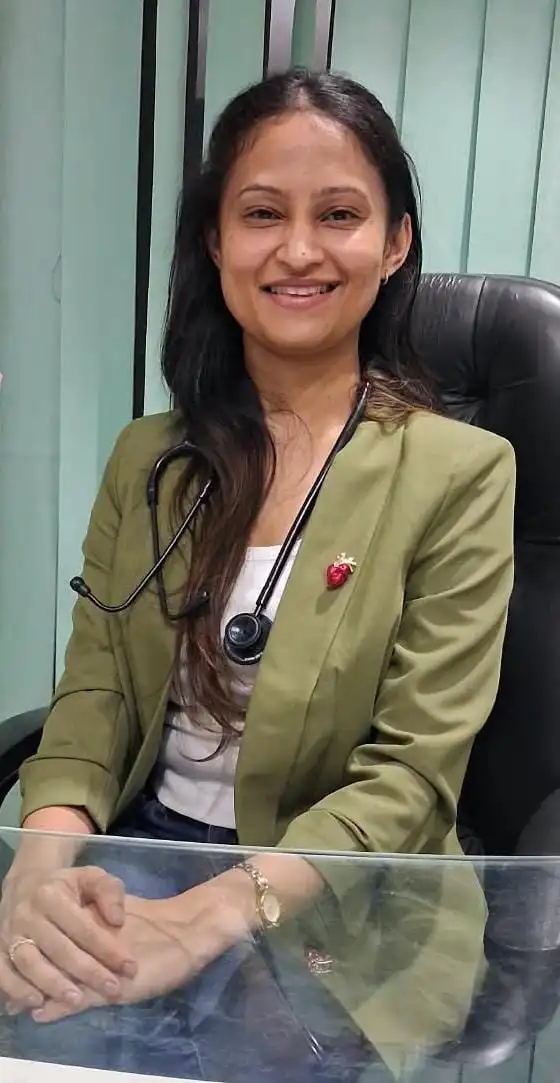
Meet Dr Gauri Karmarkar

MBBS · DNB (General Medicine) · DrNB (Cardiology)
Dr. Gauri Karmarkar is a Consultant Cardiologist with specialised training in Interventional Cardiology and General Medicine. She holds an MBBS degree from BJ Medical College, Pune, a DNB in General Medicine from Inlaks and Budhrani Hospital, Pune, and a DrNB in Interventional Cardiology from Deenanath Mangeshkar Hospital and Research Institute, Pune.
With professional experience at leading healthcare institutions in Pune, including Kamla Nehru Hospital and Fabiani Budhrani Heart Institute, she has developed clinical experience in the diagnosis and management of cardiovascular conditions.

Her clinical expertise includes 2D Echocardiography, Coronary Angiography, Percutaneous Coronary Angioplasty, Cardiac Catheterisation and various advanced interventional cardiology procedures. She also has experience with temporary pacemaker insertion, pericardial effusion tapping and other specialised cardiac procedures.

Dr. Gauri believes in evidence-based medical practice, compassionate patient care and a personalised approach to understanding cardiovascular health. Her professional interests include preventive cardiology, clinical research and medical education.

At Anurag Heart Care, her approach focuses on helping patients understand their heart health, receive appropriate medical guidance and make informed decisions about their cardiovascular well-being.
Her commitment is simple: providing thoughtful, evidence-based cardiac care with dedication and compassion.
FAQS

Pacemaker: common questions

Still have a question? Call or WhatsApp the clinic.

Is pacemaker implantation painful?

It is done under local anaesthesia, so you feel only pressure. There may be mild soreness at the site for a few days.

Can I live a normal life with a pacemaker?

Yes. Most people return to normal routines, including work, travel and exercise, with regular device check-ups.

How long does a pacemaker battery last?

Usually many years, depending on how often it needs to pace. When the battery runs low, the unit is replaced in a short procedure; the leads are usually kept.

Can I use a mobile phone or microwave?

Yes. Keep the phone about 15 cm away from the device, for example by using the ear on the opposite side. Household appliances are safe.

Can I have an MRI scan with a pacemaker?

Many modern pacemakers are MRI-conditional, which means MRI is possible with precautions. Always tell the scanning team about your device.

Where can I get pacemaker implantation in Pune?

Dr Gauri Karmarkar consults and performs procedures at affiliated hospitals. Call +91 9356253548 to book.

RELATED CARE

You may also find these helpful

Related tests and treatments, explained in the same clear way.
HEART CARE

Heart Rhythm Problems

A racing, irregular or slow heartbeat, dizziness and fainting spells.
HEART TEST

Holter & Ambulatory BP Monitoring

24 to 48-hour recordings of your heartbeat and blood pressure.
HEART TEST

ECG & 2D Echocardiography

Quick, painless tests of your heart rhythm, pumping and valves.
BOOK AN APPOINTMENT

Book a consultation with a cardiologist in Kothrud, Pune

Leave your name and number, and the clinic will call you back to fix a time at the hospital that suits you.
CALL OR WHATSAPP
EMAIL
OPD
Anurag Heart Care: Mon–Sat · 10–8 pm

Request a call back

Takes less than a minute. Only your name and phone number are required.

    For severe chest pain or breathlessness, do not wait: go to the nearest hospital emergency or call 108.