HEART PROCEDURE · Kothrud, Pune

Angioplasty in Pune

Opening a blocked heart artery with a balloon and stent, without open-heart surgery.
Coronary angioplasty (PTCA) restores blood flow to the heart through a thin tube, usually placed at the wrist. Dr Gauri Karmarkar performs planned angioplasty as well as emergency angioplasty during a heart attack, using imaging guidance and rotablation when the blockage calls for it.
Angioplasty in Pune – opening a blocked heart artery with a stent
Dr Gauri Karmarkar
DrNB Cardiology · Consultant Cardiologist
DrNB Cardiology
Deenanath Mangeshkar Hospital, Pune
Specialised Cardiac Expertise
Angiography · Angioplasty · 2D Echo
Your language
English · Hindi · Marathi ·
OPD in Kothrud, Pune
Anurag Heart Care
OVERVIEW

What is coronary angioplasty?

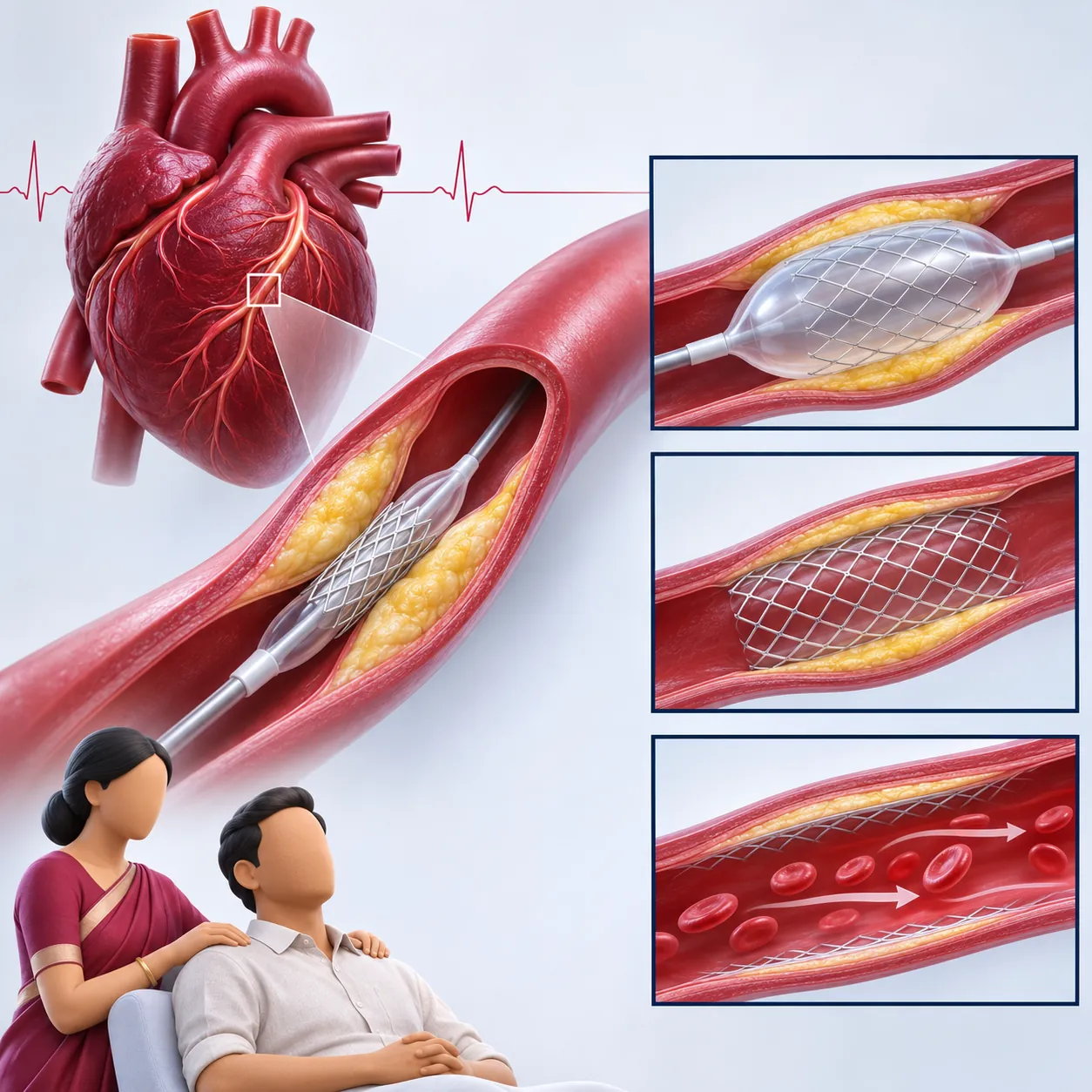
When a coronary artery is badly narrowed or completely blocked, the heart muscle beyond it is starved of blood. Angioplasty opens the artery from the inside. A fine wire is passed across the blockage, a small balloon is inflated to push the plaque aside, and a stent, a tiny mesh tube, is left in place to keep the artery open.
Modern stents are drug-eluting: they slowly release a medicine that lowers the chance of the artery narrowing again. The whole procedure is done through a catheter, so there is no cut on the chest and recovery is quick.
AT A GLANCE
DONE UNDER
Local anaesthesia
USUAL ROUTE
Wrist (radial artery)
TAKES ABOUT
45–90 minutes
HOSPITAL STAY
Usually 1–2 days
WHO NEEDS IT

When is angioplasty advised?

Not every blockage needs a stent. Angioplasty is advised when it will relieve symptoms, protect heart muscle or save a life, and when it is a better choice for you than medicines alone or bypass surgery.

In an emergency

—
A heart attack (STEMI), where primary angioplasty can be life-saving
—
Unstable angina or a smaller heart attack with high-risk features
—
Sudden worsening of chest pain at rest

Planned treatment

—
Chest pain on exertion despite good medicines
—
A significant blockage seen on angiography
—
A large area of heart at risk on a stress test
—
Narrowing again inside an old stent
Every minute counts in a heart attack
If you have crushing chest pain, sweating or breathlessness, go straight to the nearest hospital emergency or call 108. The earlier a blocked artery is opened, the more heart muscle can be saved.
PTCA – balloon angioplasty and drug-eluting stent
PTCA: BALLOON AND STENT

How a stent keeps the artery open

After angiography shows the blockage, a guide wire is passed across it. A balloon is inflated to open the narrowed segment, and a drug-eluting stent is expanded against the artery wall. The balloon is removed; the stent stays.
Over the following months, the lining of the artery grows over the stent. Taking your blood-thinning medicines exactly as prescribed during this time is essential.
PRIMARY ANGIOPLASTY

Angioplasty during a heart attack

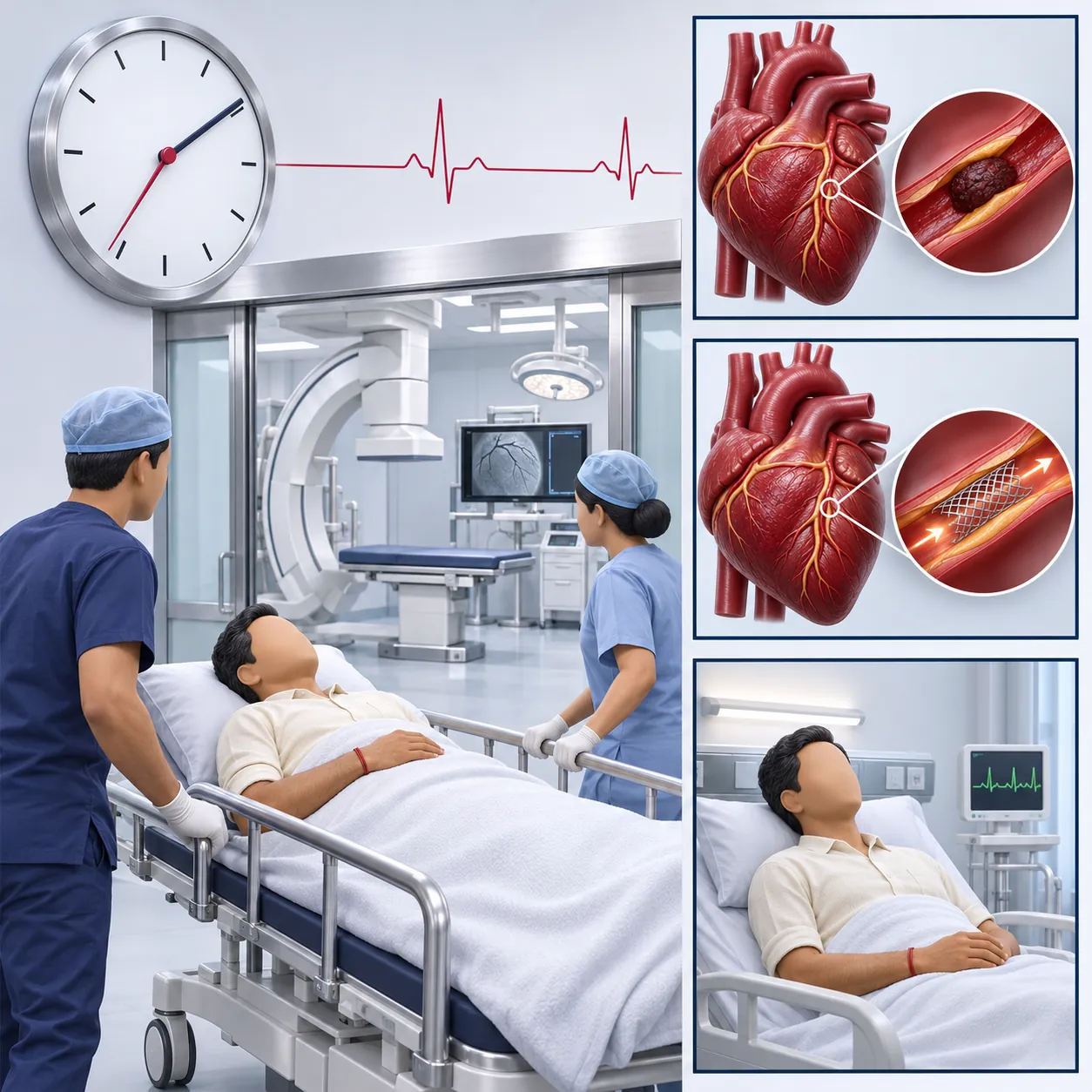
In a major heart attack, an artery is suddenly and completely blocked by a clot. Primary angioplasty opens it as an emergency, ideally within 90 minutes of reaching hospital. It is the preferred treatment where it is available, because it restores blood flow quickly and saves heart muscle.
Do not drive yourself to hospital with heart attack symptoms. Call 108 or ask someone to take you.
Primary angioplasty in a heart attack
Imaging-guided angioplasty (IVUS / OCT)
IMAGING-GUIDED ANGIOPLASTY

Seeing inside the artery with IVUS and OCT

Angiography shows the outline of an artery. Intravascular imaging, using IVUS (ultrasound) or OCT (light), shows the artery wall from the inside: how hard the plaque is, its true size, and whether the stent has expanded fully.
This helps choose the right stent size and position, especially in long blockages, the main (left main) artery and blockages at branch points.
ROTABLATION

Rotablation for calcified arteries

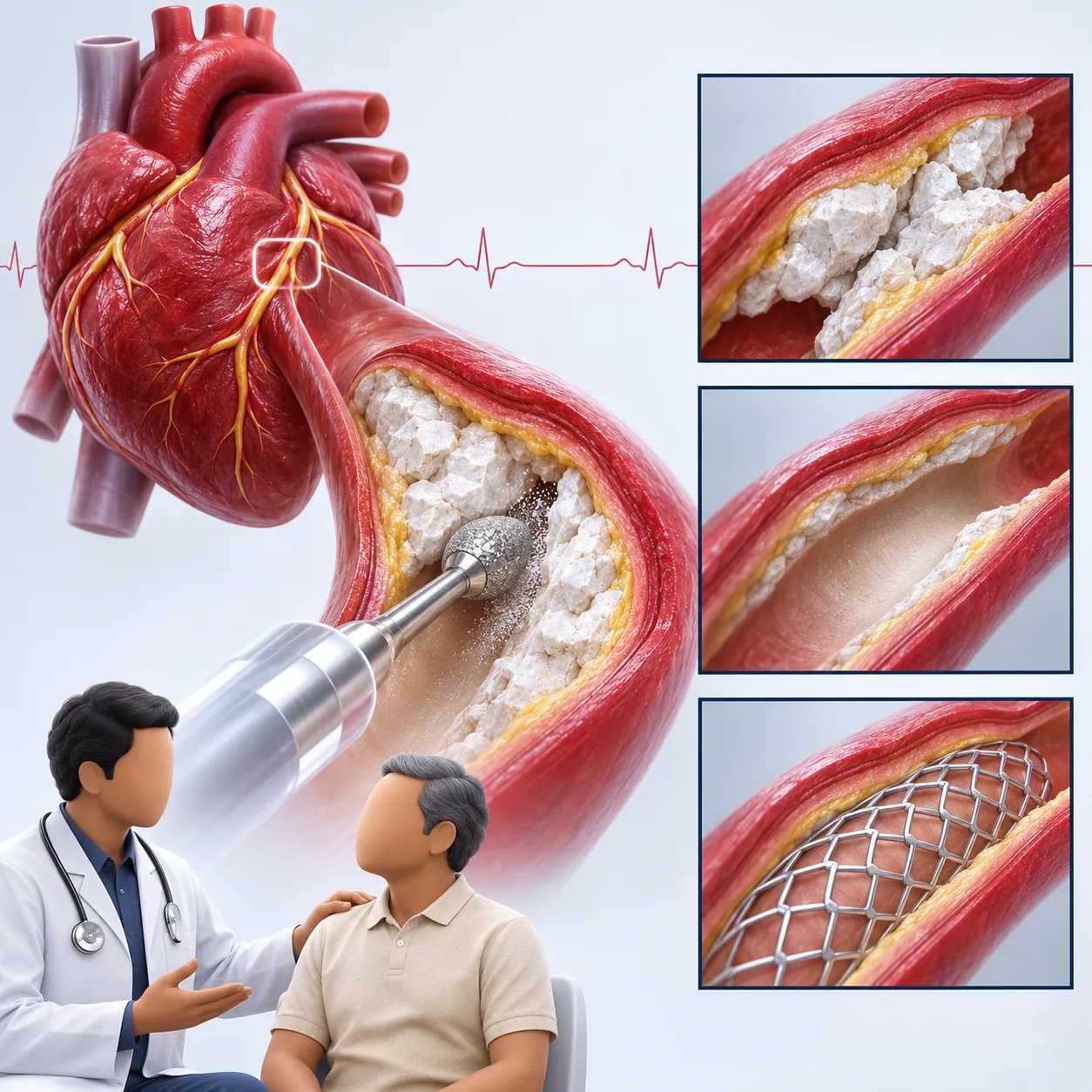
Some blockages are so calcified, almost like stone, that a balloon cannot open them. Rotablation uses a tiny diamond-tipped burr, spinning at very high speed, to gently shave the calcium so the artery can be prepared for a stent.
It is a specialised technique used only when needed, often in older patients and people with diabetes or kidney disease.
Rotablation for heavily calcified coronary arteries
Recovery after angioplasty
RECOVERY

Recovery after angioplasty

Most patients walk within a few hours and go home in 1 to 2 days. Desk work can usually resume in about a week, with heavier activity built up gradually.
—
Take blood thinners every day; never stop them without asking your cardiologist
—
Join a cardiac rehabilitation or walking programme
—
Control blood pressure, sugar and cholesterol
—
Stop smoking completely
—
Keep your follow-up visits, even when you feel well
YOUR ANGIOPLASTY, STEP BY STEP

A clear plan from start to finish

You and your family will know what is being done, why, and what happens next.
01

Assessment

Symptoms, ECG, echo and angiography are reviewed, and every option is discussed.
02

Preparation

Blood tests, kidney function, medicine changes and written consent.
03

The procedure

Usually through the wrist, under local anaesthesia, with imaging guidance when needed.
04

Recovery and follow-up

Home in 1 to 2 days, with a medicine plan, lifestyle advice and regular check-ups.
MEET YOUR CARDIOLOGIST

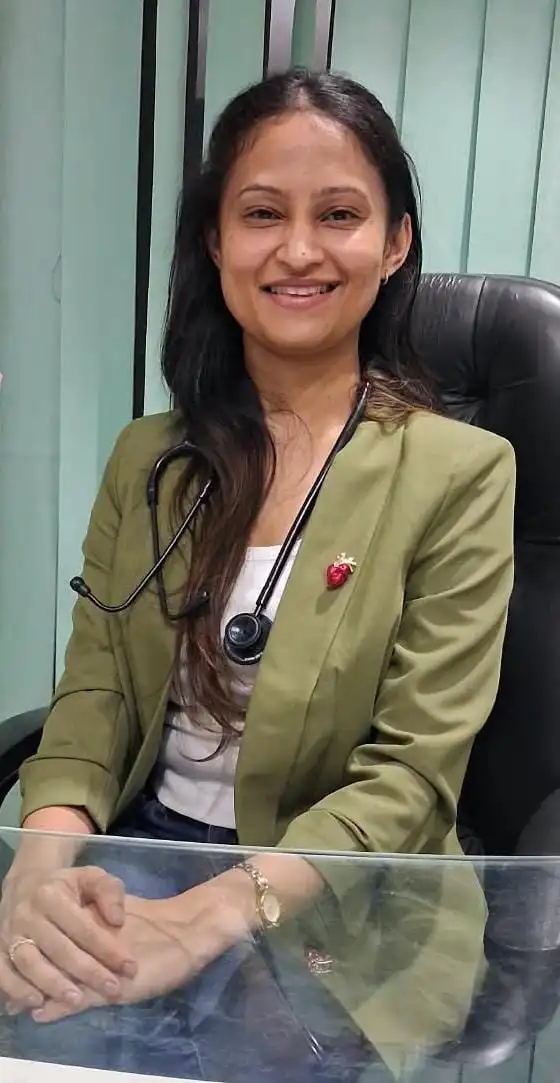
Meet Dr Gauri Karmarkar

MBBS · DNB (General Medicine) · DrNB (Cardiology)
Dr. Gauri Karmarkar is a Consultant Cardiologist with specialised training in Interventional Cardiology and General Medicine. She holds an MBBS degree from BJ Medical College, Pune, a DNB in General Medicine from Inlaks and Budhrani Hospital, Pune, and a DrNB in Interventional Cardiology from Deenanath Mangeshkar Hospital and Research Institute, Pune.
With professional experience at leading healthcare institutions in Pune, including Kamla Nehru Hospital and Fabiani Budhrani Heart Institute, she has developed clinical experience in the diagnosis and management of cardiovascular conditions.

Her clinical expertise includes 2D Echocardiography, Coronary Angiography, Percutaneous Coronary Angioplasty, Cardiac Catheterisation and various advanced interventional cardiology procedures. She also has experience with temporary pacemaker insertion, pericardial effusion tapping and other specialised cardiac procedures.

Dr. Gauri believes in evidence-based medical practice, compassionate patient care and a personalised approach to understanding cardiovascular health. Her professional interests include preventive cardiology, clinical research and medical education.

At Anurag Heart Care, her approach focuses on helping patients understand their heart health, receive appropriate medical guidance and make informed decisions about their cardiovascular well-being.
Her commitment is simple: providing thoughtful, evidence-based cardiac care with dedication and compassion.
FAQS

Angioplasty: common questions

Still have a question? Call or WhatsApp the clinic.

Is angioplasty a major operation?

No. It is done through a small tube, usually placed at the wrist, under local anaesthesia. There is no cut on the chest.

Will I need a stent or bypass surgery?

That depends on how many arteries are blocked, where, and how severely, along with your overall health. Dr Gauri Karmarkar will explain all options, including medicines alone.

How long does a stent last?

A stent is permanent. The artery can narrow again over time, which is why medicines, lifestyle changes and regular follow-up matter.

How long do I need blood thinners?

Usually two blood thinners for 6 to 12 months and one of them long term. Your cardiologist will decide the exact duration. Never stop them on your own.

When can I return to work after angioplasty?

Most people return to desk work within about a week. Physically demanding work may need a few weeks. Your doctor will guide you.

Where can I get angioplasty in Pune?

Dr Gauri Karmarkar consults and performs procedures at affiliated hospitals. Call +91 9356253548 to book a consultation.

RELATED CARE

You may also find these helpful

Related tests and treatments, explained in the same clear way.
HEART PROCEDURE

Coronary Angiography

The X-ray test that shows exactly where heart arteries are narrowed or blocked.
HEART CARE

Chest Pain & Coronary Artery Disease

Finding out whether chest pain is from the heart, and treating blocked arteries.
HEART CARE

Preventive Cardiology & Cholesterol

Lowering your risk of a heart attack before problems start.
BOOK AN APPOINTMENT

Book a consultation with a cardiologist in Kothrud, Pune

Leave your name and number, and the clinic will call you back to fix a time at the hospital that suits you.
CALL OR WHATSAPP
EMAIL
OPD
Anurag Heart Care: Mon–Sat · 10–8 pm

Request a call back

Takes less than a minute. Only your name and phone number are required.

    For severe chest pain or breathlessness, do not wait: go to the nearest hospital emergency or call 108.